Book Your Massage
Professional relaxing and sports massage in Maspalomas. Personalized sessions by experienced therapist Laura.
Book Now +34 600 116 429Table of Contents
Thai Massage: What Happens on the Mat and Why It Feels So Different
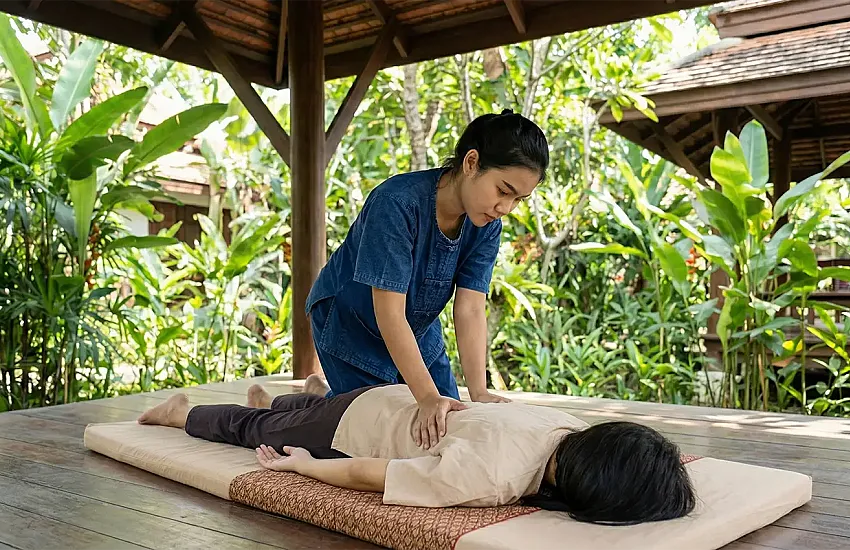
You step into a quiet room and notice something unexpected: there is no massage table, no bottles of oil, and no scented lotions waiting on a trolley. Instead, a padded mat rests on the floor. You remain fully dressed in loose clothing. Within minutes, the session begins—not with rubbing, but with careful, rhythmic pressure and guided movement that can feel like someone is helping your body remember how to breathe, lengthen, and let go.
This is Traditional Thai massage, often described as “assisted yoga,” and it follows a distinctive system designed to support circulation, improve flexibility, and encourage balance along the body’s sen (energy) pathways.
How Traditional Thai Massage Works
Unlike many forms of Western bodywork that rely heavily on gliding strokes with oils, Thai massage uses a blend of compression, acupressure-style contact, rocking motions, and assisted stretching. The therapist may use not only their hands, but also their forearms, elbows, knees, and feet to apply steady pressure and to guide your body into gentle, structured positions.
The intention is not simply to “work a knot,” but to engage the whole body—muscles, joints, and movement patterns—so you can leave feeling more open, aligned, and energized.

The Tools a Thai Massage Practitioner May Use
- Hands and palms to deliver broad, grounding compression and warm the tissues.
- Thumbs and forearms to apply more focused pressure along specific areas.
- Elbows and knees for deeper, controlled contact when appropriate.
- Feet (used skillfully and safely) to deliver strong, even pressure on larger muscle groups.
Key Features That Make Thai Massage Unique
1) Technique: Compression, Stretching, and Rocking
Thai massage is movement-based. Your therapist may gently traction your limbs, guide your hips through a range of motion, or rock your body to invite relaxation. These methods aim to reduce stiffness, restore mobility, and help the body settle into a more natural rhythm.
2) Clothing and Environment: Fully Clothed on a Floor Mat
A classic Thai massage session is typically performed on a comfortable floor mat. Because the work relies on pressure and leverage rather than slick strokes, you generally wear soft, flexible clothing. Oils and lotions are usually not part of the session, which makes it a practical option for people who prefer a non-oil massage experience.
3) Core Philosophy: Metta and the Sen Lines
Traditional Thai massage is closely connected to spiritual and cultural traditions, including Buddhist principles. Many practitioners approach the session with metta—a mindset of loving-kindness and compassionate attention. The work often follows the body’s sen lines, which are considered energetic pathways used as a map to guide pressure and stretching.
4) Session Flow: Often Beginning at the Feet and Moving Upward
While every therapist has their own style and sequence, many Thai massage routines begin at the feet and legs, then gradually progress upward through the body. This creates a steady, full-body progression that often emphasizes lengthening, opening the hips, and easing common tension zones such as the shoulders and back.

Benefits of Thai Massage (And Why People Keep Coming Back)
People seek Thai massage for both physical relief and mental reset. The combination of assisted stretching and deep, rhythmic compression can be especially appealing if you feel stiff, overworked, or “stuck” from long hours at a desk or repetitive activity.
Commonly Reported Benefits
- Relief from persistent discomfort, especially in the back, neck, and shoulders.
- Reduced stress and tension through calming, repetitive pressure and supported movement.
- Improved flexibility and range of motion by mobilizing joints and lengthening tight muscle groups.
- A natural energy lift—many people describe feeling alert yet relaxed afterward.
What It Feels Like: Deep Work with a Rewarding Finish
A Thai massage can be more intense than expected, particularly if you are not used to stretching or deeper pressure. Some positions may feel strong—occasionally even uncomfortable for a moment—yet the session is designed to remain therapeutic rather than overwhelming.
For many, the most memorable part is what comes after: a sense of spaciousness in the body, a lighter feeling through the spine and shoulders, and a calm that lingers long after leaving the mat.

Who Should Be Cautious: Risks and Contraindications
Because Thai massage includes strong compression and assisted stretching, it is not the best choice for everyone. If you have health concerns, it is wise to consult a healthcare professional and inform your therapist before the session.
Thai Massage May Not Be Suitable If You Have:
- Severe arthritis or significant joint instability.
- High blood pressure that is not well controlled.
- Pregnancy (unless seeing a practitioner trained specifically in prenatal Thai massage and cleared by your doctor).
Common Thai Massage Techniques You May Experience
Palm Compression (A Grounding Warm-Up)
Broad palm pressure is frequently used to prepare muscles and encourage circulation, often applied along large areas such as the legs. This helps the body soften before deeper techniques or stretching are introduced.
Assisted Yoga-Style Stretching (Supported Poses Without Effort)
Your therapist may guide you into controlled stretches that open the hips, lengthen the back, and mobilize the shoulders. You are not expected to “perform” the stretch; instead, you relax while the practitioner supports your movement safely.
How to Get the Best Results: Communicate Clearly
The most important way to ensure a positive Thai massage experience is simple: talk to your therapist. If pressure feels too strong, if a stretch feels risky, or if you have a sensitive area, say so. A skilled practitioner can modify hand positions, reduce intensity, or choose a different technique to match your comfort level.
With the right communication and an experienced therapist, Traditional Thai massage can be a powerful, full-body practice—one that blends mindful care, assisted movement, and deep relaxation into a session that feels both ancient and surprisingly relevant to modern life.
Table of Contents
Gallery


Massage Maspalomas
The Massage Maspalomas team shares wellness tips, massage insights, and the best ways to relax and recover during your stay in Gran Canaria.